
“Adapted from Boosting Your Energy, Medical Editor: Anthony L. Komaroff, MD, Simcox-Clifford-Higby Professor of Medicine, Harvard Medical School; Senior Physician, Brigham & Women’s Hospital, Boston.
Stress is a natural response to emotional or physical pressure. In small amounts it can help you stay focused and meet challenges. But when it is constant or overwhelming, it can harm your physical and mental health.
Managing stress effectively can reduce anxiety, boost energy, and improve overall well-being. The key is learning how to interrupt the body’s stress response and activate the relaxation response.
How exercise calms the mind
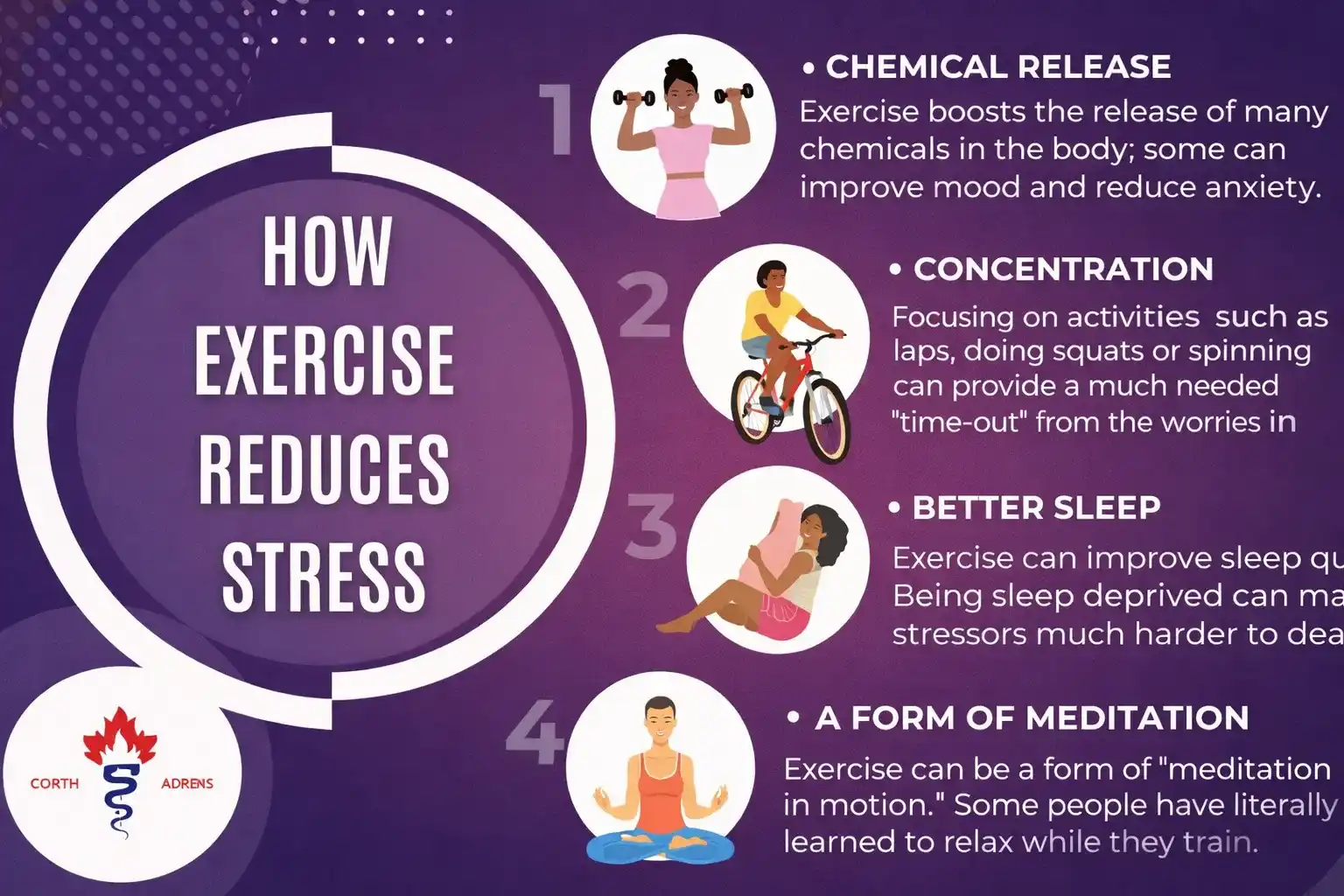
Exercise isn’t just good for your physical health. It’s also a great stress reducer as well as an energy booster. Regular aerobic exercise helps the body’s “stress system” – mainly parts of the brain and the adrenal glands – release fewer stress hormones in response to daily stressors. At the same time, exercise stimulates endorphin production, creating a calming, mood-lifting effect that can make it easier to cope with stress.
The mind-body connection
You can learn to moderate the stress response with meditation, other mind-body techniques, or cognitive behavioral therapy (CBT). CBT is a type of psychotherapy that helps you identify and change negative thoughts and behaviors. Both mainstream health care providers and integrative medicine specialists often recommend mind-body techniques as stress-reduction strategies.
You might also be interested in…
Cognitive Fitness Online Course
Wondering if you can affect your brain health, memory, and cognitive function? Learn in our course about simple lifestyle changes you can make to optimize your cognitive fitness—and stay mentally sharp!
Learn More!
Although there are many different mind-body techniques, their common goal is to turn off the stress response by eliciting its opposite – the relaxation response. All relaxation techniques emphasize a strong connection between the mind and the body. With practice, you can tap into this connection to find calm and balance.
Mind-body techniques
These physical activities blend movement with mindfulness, offering a double benefit. You may want to incorporate one of these mind-body techniques into your daily routine.
Qigong. This ancient Chinese art melds breathing, meditation, gentle exercise, and flowing movements. (Qi is the Chinese word for the life energy believed to course through the body. Qigong is thought to unblock and properly balance the flow of qi.) When practiced regularly, qigong can lower your blood pressure, pulse, and demand for oxygen, as do other techniques that elicit the relaxation response. Qigong may also enhance balance and flexibility.
Rhythmic, repetitive activities. Rhythmic exercises such as walking, jogging, swimming, or bicycling can be calming and relaxing. Once you get under way, try to become aware of how your breathing complements the activity. Breathe rhythmically, repeating a focus word, phrase, or prayer you’ve chosen. Remember to adopt a passive attitude. When disruptive thoughts intrude, gently turn your mind away from them and focus on moving and breathing.
A mindful walk. Taking a mindful walk is a good example of exercising with relaxation in mind. As you move and breathe rhythmically, be aware of the sensations of your body. How does it feel as your breath flows in through your nostrils and out through your mouth? Gradually expand your awareness to the sights and smells around you. Notice the freshly mown grass, flowers, trees, fallen leaves, dappled sunlight, or gray clouds. How does the outside air feel against your body? How does the surface beneath your feet feel and sound? What thoughts are moving through your head?
You might also be interested in…
Anxiety and Stress Disorders: A guide to managing panic attacks, phobias, PTSD, OCD, social anxiety disorder, and related conditions
If you suffer from symptoms of an anxiety disorder, there is hope. The field of anxiety treatment continues to evolve. You don’t have to just “live with it” anymore. Anxiety and Stress Disorders, a Special Health Report from Harvard Medical School, reveals today’s most effective treatments—including natural approaches, evidence-based therapies, and medications that work differently than older drugs. You deserve to live without constant worry and fear. Take control of your anxiety and order Anxiety and Stress Disorders today!
Learn More
A slow, mindful walk helps center and relax you. Alternatively, a brisker pace that pushes your limits can be calming and energizing in equal parts. In this case, place more emphasis on the sensations of your body, such as your quickened breathing and heartbeat and the way your muscles respond as you tax them.
Tai chi. This mind-body exercise regimen, which consists of a series of flowing postures that you perform in a set sequence while centering your mind, is an excellent form of physical activity to reduce stress and boost vitality, particularly in older adults. It is a gentle, accessible form of exercise that can break the cycle of sedentary behavior while improving balance, coordination, flexibility, muscle strength, and stamina.
In addition to reducing stress, tai chi can improve body awareness and reduce social isolation when it’s practiced in a group setting. Sessions, which usually last an hour, begin with meditation and progress to the postures, which are performed slowly (although some styles of practice are done at higher intensity). Body posture and deep breathing are key elements of correct practice, and regular, ongoing sessions confer the most benefit.
Yoga. Like tai chi, yoga is a proven stress buster with numerous studies showing substantial benefits for both mind and body. Research demonstrates that the practice of yoga reduces the burden of mental stress, which expends a lot of the body’s energy resources. In addition, yoga improves physical health and the quality of sleep over the long term, which adds up to more vigor. And because stress plays a role in worsening the symptoms caused by most diseases, yoga may be even more beneficial for chronically ill people than it is for healthy individuals. As with other mind-body techniques, regular practice yields the most benefit.